Meet a WINS Academy Ambassador: “The WINS Academy offers far more than a qualification.”
11/11/2026ambassador
Share this article
Key Words
Meet A New WINS Academy Ambassador
Our newest WINS Academy Ambassador, Adam Shone, is the Security Manager Projects at NRS, leading the development and delivery of security programmes that support the safe and secure decommissioning of one of the UK’s most complex nuclear sites. His expertise spans physical protection, vulnerability assessment, security risk management, emergency preparedness and resilience. Working with regulators, emergency services and industry partners, he helps ensure security requirements are effectively integrated into major projects, operational change and organisational improvement programmes.
Adam has extensive experience in the design, delivery and evaluation of security exercises – such as REDE 2026 – using performance testing to assess protective arrangements, guard force effectiveness and organisational readiness. He contributed to the development of the WINS Academy Nuclear Security Programme Management course and the WINS Best Practice Guide on Security Exercise Programmes for Nuclear Facilities. He has also presented at international workshops on the role of security exercises in performance testing guard forces, and on countering violent extremism through strengthened employee engagement and security culture, helping to share best practice across the global nuclear security community.
In this interview, he discusses the importance of continuous learning to complement operational experience, upcoming challenges for nuclear security professionals, and the role of international experience sharing.
How did you first enter the nuclear security field, and what has kept you motivated throughout your career?
My career began with the Civil Nuclear Constabulary, where I progressed to Inspector. During that time, I worked closely with site security teams, particularly on counter-terrorism response planning and exercising. That gave me a broader understanding of nuclear security and showed me how much of it extends beyond a policing response.
Moving into security felt like a natural next step. What keeps me motivated is the opportunity to solve complex problems, support major projects and work with talented people across the industry. No two days are the same, and there is always something new to learn.
In your experience, what distinguishes organisations with truly effective security programmes from those that simply meet requirements?
The best organisations don’t treat security as a compliance exercise.
They understand that security needs to support the organisation’s objectives whilst managing risk effectively. They challenge themselves, learn from experience and are willing to adapt rather than simply doing things because they’ve always been done that way.
Most importantly, they understand that people sit at the centre of every security programme. People are often our greatest strength, but they can also be our greatest vulnerability.
“People sit at the centre of every security programme. People are often our greatest strength, but they can also be our greatest vulnerability.”
How important is continuous professional development in maintaining strong security performance?
It’s essential.
Threats evolve, technology advances and expectations change. Experience remains important, but we can’t rely solely on what worked yesterday to solve tomorrow’s problems.
The most effective professionals I’ve worked with are the ones who remain curious, seek out new ideas and never stop learning.
In your view, what is the value of bringing together professionals from different disciplines and backgrounds through organisations such as WINS?
One of WINS’ greatest strengths is the ability to connect people who bring different experiences and perspectives to the same challenge.
The reality is that very few security problems are unique. Someone, somewhere in the international nuclear security community has probably faced a similar issue before. WINS provides an environment where we can learn from each other, share good practice and avoid reinventing the wheel.
Many professionals gain expertise through experience, but how important is it to complement that experience with formal learning and professional credentials like WINS Academy certification programmes?
Experience gives you judgement. Formal learning gives you structure.
The two work best together. Programmes such as the WINS Academy expose professionals to new ideas, recognised good practice and international perspectives that they may not encounter in their day-to-day role.
Professional credentials are valuable, but the real benefit comes from challenging your thinking and becoming a more rounded practitioner.
“Programmes such as the WINS Academy expose professionals to new ideas, recognised good practice and international perspectives.”
What emerging challenges should the next generation of nuclear security professionals be preparing for now?
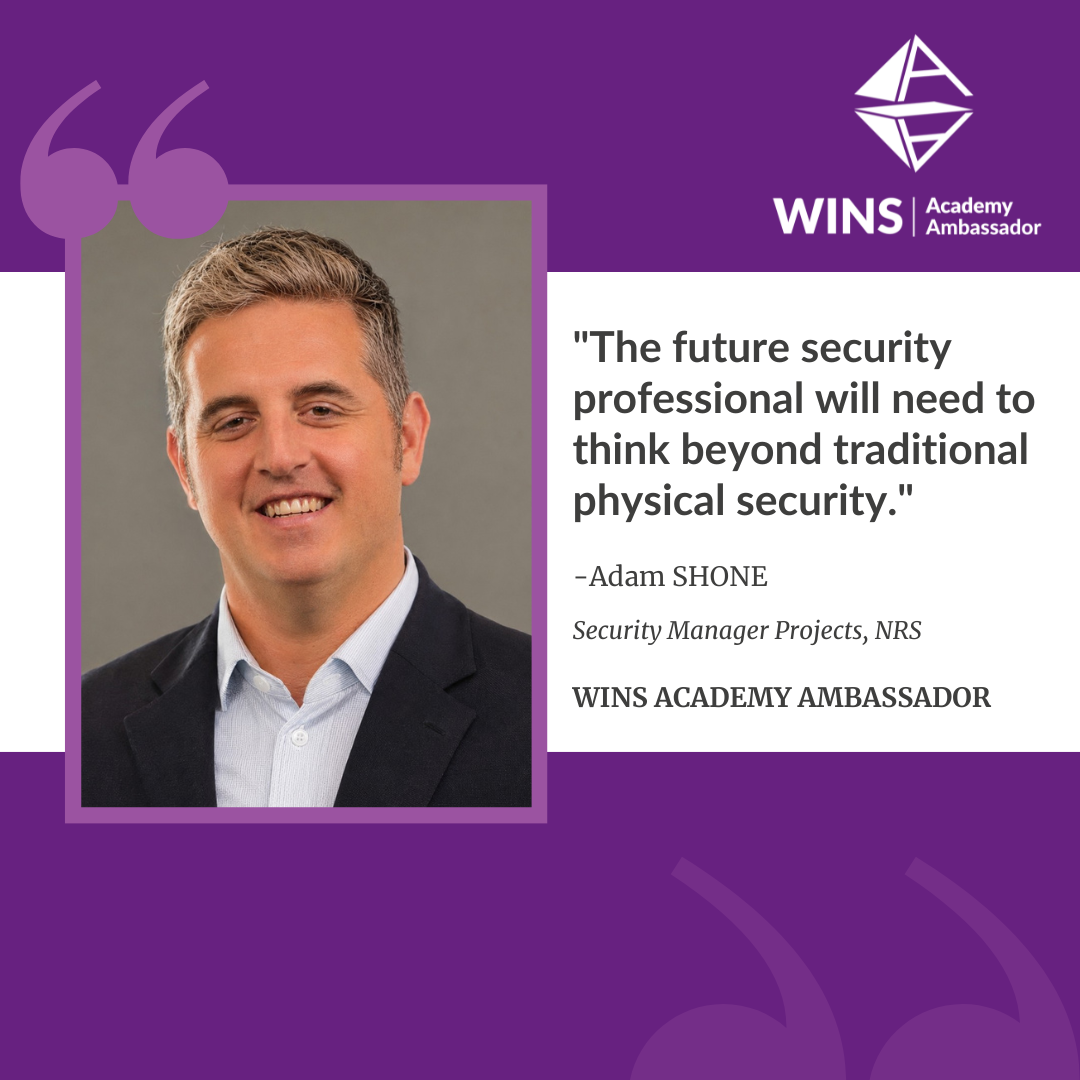
The future security professional will need to think beyond traditional physical security.
Cyber threats, insider risk, emerging technologies and increasingly complex operating environments will all demand greater integration between security, resilience and business operations.
Technical knowledge will always matter, but the ability to collaborate, influence and make decisions in uncertain situations will become equally important.
My advice would be simple: Develop internal relationships, keep learning and build external networks. The people around you are often your greatest source of knowledge and support.
What was your WINS Academy specialisation? Why did you choose it?
I completed the Nuclear Security Incident Management elective. A large part of my career has involved security exercising, emergency preparedness and resilience, so it was a natural choice.
Whilst preventing incidents is always the goal, organisations also need to be prepared to respond effectively when things do not go to plan. The programme reinforced the importance of leadership, decision-making and effective command and control during security incidents, and provided useful insights from organisations operating in different environments across the world.
What inspired you to become a WINS Academy Ambassador?
Throughout my career I’ve benefited from learning from others, whether that’s colleagues, partners or professionals from across the wider nuclear security community.
“The WINS Academy offers far more than a qualification. It provides access to international perspectives, practical learning and a network of professionals facing many of the same challenges.”
What advice do you have for current WINS Academy learners or those considering enrolling?
Professional growth starts by taking the first step. Don’t wait until you think you’re ready. Growth comes from challenging yourself, learning from others and being open to new perspectives. That’s exactly what WINS enables.
The WINS Academy offers far more than a qualification. It provides access to international perspectives, practical learning and a network of professionals facing many of the same challenges. Whether you are early in your career or have decades of experience, there is always something new to learn and someone with a different perspective who can help you improve.
How has your WINS Academy training helped you in your current job position?
The training strengthened my understanding of how effective security programmes are developed, maintained and continually improved. That has been particularly valuable when supporting decommissioning projects, conducting vulnerability assessments and ensuring security remains aligned with wider organisational objectives.
It has also complemented my work in exercising and incident preparedness, where understanding how people, processes and security systems perform under pressure is often just as important as the protective measures themselves.
How has your involvement with WINS influenced your professional development?
My involvement with WINS has given me the opportunity to work with and learn from security professionals across the world. Alongside contributing to WINS guidance and training products, I have presented at workshops on the Role of Security Exercises in Performance Testing a Guard Force and at the International Best Practices Workshop on Countering Violent Extremism Through Strengthened Employee Engagement and Security Culture.
One of the biggest benefits has been access to a truly global network of practitioners. No matter what challenge you are facing, there is a good chance someone else has already faced it, learned from it and is willing to share that experience. That ability to learn from others has undoubtedly made me a better security professional.
Good security professionals learn from their own experiences. Great security professionals learn from everyone else’s as well. That’s the power of WINS.
“Good security professionals learn from their own experiences. Great security professionals learn from everyone else’s as well. That’s the power of WINS.”
How important is international collaboration in strengthening nuclear security?
It is essential.
Whilst organisations operate in different regulatory environments, many of the challenges we face are the same. WINS creates opportunities to share lessons learned, discuss emerging threats and exchange good practice with professionals from across the globe.
No single organisation has all the answers. The ability to learn from the successes and mistakes of others helps us avoid group think, continually improve and ultimately strengthen nuclear security across the industry.
Questions for NRS
How has Adam’s involvement with WINS benefitted the organisation?
Adam’s involvement with WINS helps bring international good practice, learning and professional networks back into the organisation. His contribution to WINS guidance, training and international workshops supports NRS’s commitment to continuous improvement and helps ensure that approaches to vulnerability assessment, exercising, incident management and resilience continue to reflect recognised industry good practice.
“WINS certification provides a recognised framework for developing security professionals.”
What role does WINS certification play in the organisation’s professional development programme?
WINS certification provides a recognised framework for developing security professionals and complements operational experience with exposure to international good practice and specialist knowledge.
It supports the development of suitably qualified and experienced personnel (SQEP), encourages continual professional development and helps ensure security professionals remain connected to the wider nuclear security community and emerging industry best practice.