Background
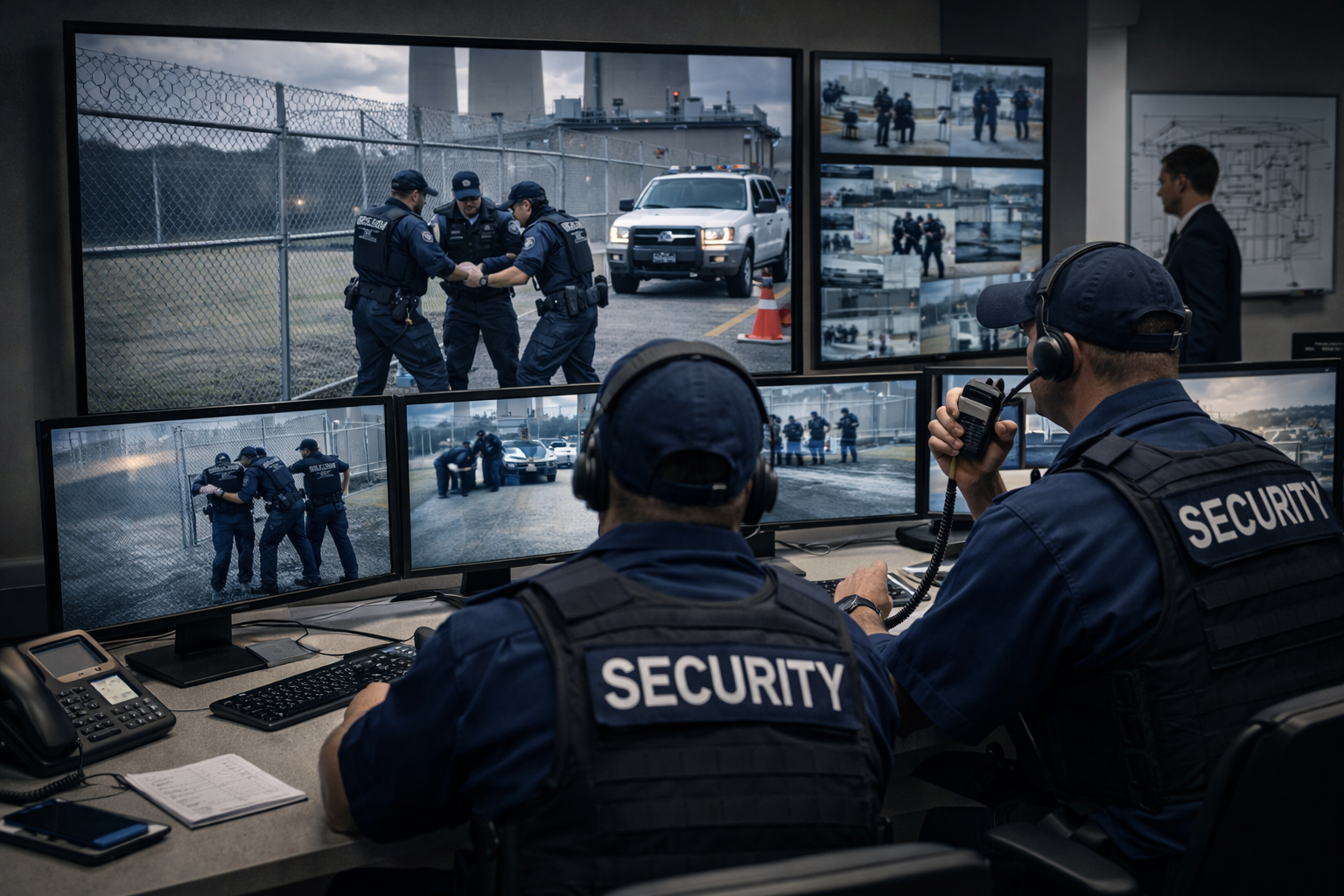
Security exercises are a fundamental tool for assessing and improving the performance of a guard force. Beyond simply checking compliance with procedures, they provide a realistic and controlled environment in which the effectiveness of people, processes and technology can be evaluated under simulated threat conditions. Through carefully designed exercises, an organisation can gain valuable insights into the actual readiness and capability of its security personnel to respond to potential incidents.
One of the primary roles of security exercises is to measure operational readiness. They help determine whether guards are capable of responding swiftly and appropriately to a range of security scenarios such as intrusions, insider threats or attempted sabotage. These simulations reveal how guards behave under pressure and whether they can translate training and procedures into effective real-world action. Exercises thus bridge the gap between theoretical knowledge and operational performance.
Security exercises also serve to validate training and competence. By observing guards in realistic conditions, security managers can assess how well personnel understand and apply their training, follow established procedures, and make decisions when confronted with uncertainty. This process often exposes areas where additional instruction or refresher training may be necessary to strengthen performance.
Another key function of exercises is to test coordination and communication within the guard force and with other elements of the security organisation, such as control room operators or response teams. Effective teamwork, situational awareness, and information flow are essential to maintaining a coherent and timely response to any security event. Exercises allow these interactions to be observed, measured and improved.
Equally important, exercises help evaluate the adequacy of security plans and procedures. Even well-designed documentation can prove impractical in a real situation. Simulated incidents highlight weaknesses in operational plans, gaps in coverage, or unclear decision-making authority. These findings enable management to refine and update procedures to ensure they remain both functional and relevant.
Security exercises also provide an opportunity to assess the use and reliability of security equipment and technology. During drills, observers can verify whether guards properly use communication devices, alarm systems, access controls, and surveillance tools. Exercises often reveal technical or operational shortcomings, such as poor equipment placement or ineffective alarm response, that can then be corrected.
Beyond assessment, exercises play a vital role in building confidence, cohesion, and preparedness within the guard force. Regular exposure to challenging but controlled situations helps personnel develop resilience and familiarity with high-stress conditions. This strengthens individual and collective confidence, ensuring that guards remain composed and effective during real security events.
Furthermore, conducting regular and well-documented exercises helps organisations demonstrate regulatory and organisational compliance. Most national nuclear security regulations require periodic performance testing of security forces. Exercise results, when properly analysed and reported, provide tangible evidence of compliance.
Finally, security exercises are powerful learning tools and effective support to continuous improvement. They create opportunities to identify weaknesses, capture lessons learned and implement corrective actions. Post-exercise debriefs and evaluations transform experience into knowledge, reinforcing a culture of continuous improvement and accountability within the security organisation.
Objectives
The workshop objectives were to enhance participants’ understanding of how security exercises can be used as an effective tool to evaluate and improve the performance of guard forces, and to provide practical guidance for planning, conducting, and evaluating such exercises. It provided a platform for participants to exchange experiences, learn from practical case studies, and build a deeper understanding of the topic.
The workshop provided participants with the opportunity to:
- Better understand the role of security exercises in performance testing and the link between exercises, readiness and security performance
- Review the types of security exercises and their objectives
- Explore the process for designing effective security exercises, including developing scenarios involving relevant internal and external stakeholders
- Better understand the need and process for balancing realism, safety and confidentiality
- Identify and discuss the roles of observers, controllers and participants
- Listen to the experience of practitioners regularly conducting security exercises
- Identify and discuss common pitfalls and how to avoid them
- Identify success criteria for an exercise and better understand the process for evaluating the performance of a guard force against these criteria
- Leverage virtual collaboration tools to enhance engagement, foster networking among participants, and facilitate the sharing of resources and best practices
Participants were encouraged to identify immediate steps that can be taken to strengthen security exercises programmes in their organisations and countries.
Audience
The workshop was open to individuals from all over the world. The target audience for this event were individuals who have a responsibility for conducting or evaluating security exercises at nuclear facilities.
Targeted participants include, amongst others, security directors and managers of guard forces at nuclear facilities, shift supervisors, guard force trainers, exercise planners, law enforcement officers, security vendors and regulators of nuclear facilities.
Process
Date: 16-17 June 2026
Time: 14:00-17:00 CEST
While in-person security exercises provide unmatched realism and hands-on experience, a virtual workshop offers unique advantages, including accessibility for global participants and the ability to draw on a wide range of expert perspectives. The workshop utilized interactive features such as live polling, breakout discussions, and collaborative digital tools to simulate the decision-making and teamwork required in real-world exercises. Special attention was paid to overcoming the limitations of virtual engagement by encouraging active participation and providing practical, scenario-based learning opportunities.
Experts from the nuclear industry and other critical infrastructures were invited to share their experiences and lessons learned from planning, preparing, conducting and evaluating security exercises.
The workshop was held in English.
Recording Day 1
Recording Day 2