Background
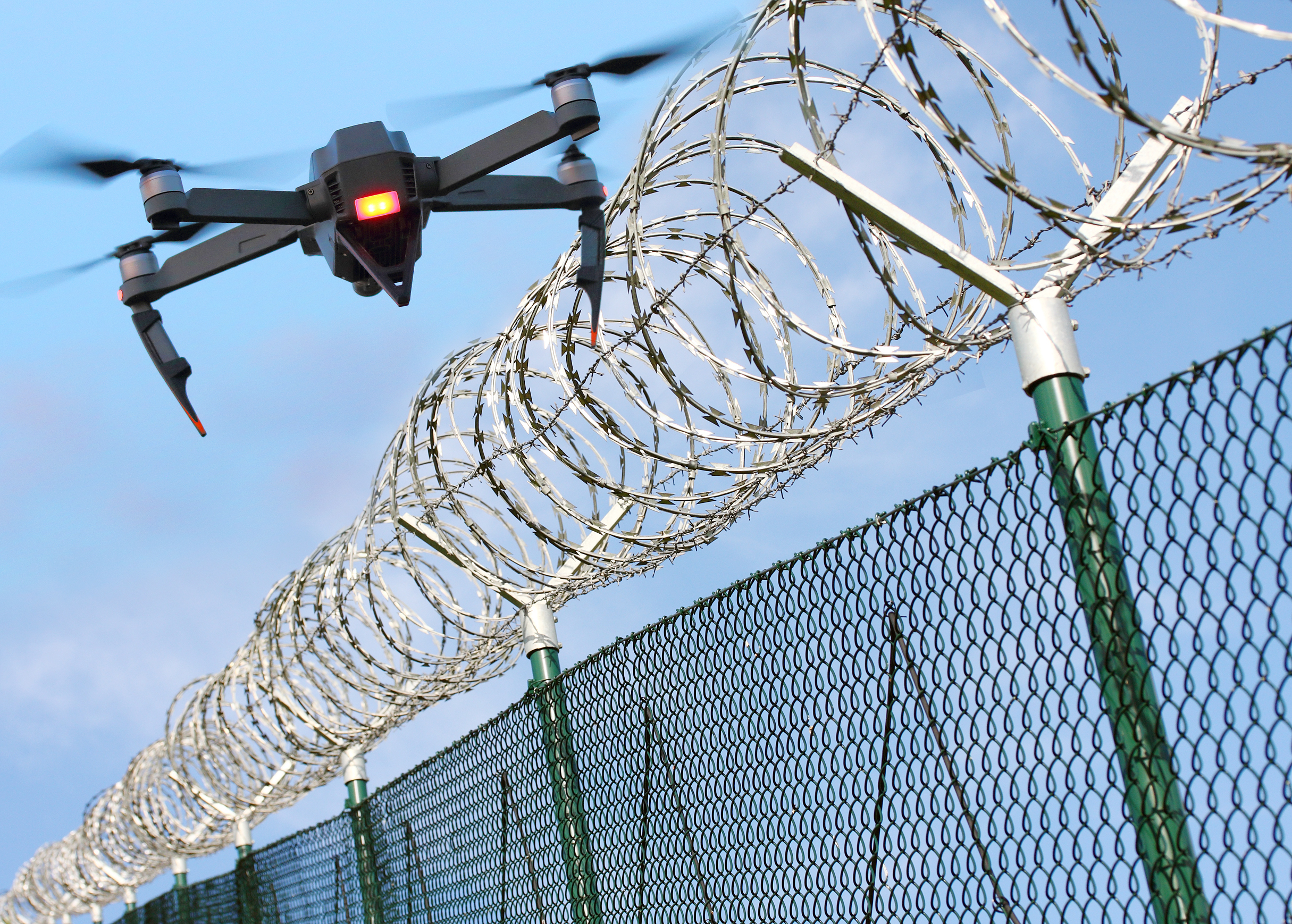
At nuclear facilities, uncrewed aerial vehicles (UAVs), commonly known as drones, are increasingly used to strengthen security by improving oversight of large areas, enhancing boundary control, and enabling rapid response when unusual events occur. Their ability to move swiftly, reach vantage points ground patrols cannot, and collect high-quality data makes them valuable tools for modern facility protection.
Drones provide real-time visibility over complex or hard-to-reach zones. Equipped with high-resolution cameras, thermal sensors or laser scanners, they allow security teams to spot unusual activity, infrastructure changes or weak spots in fencing and access points. They can support regular inspections and preventive monitoring, helping operators detect problems like vegetation overgrowth or sensor obstruction before they become security vulnerabilities. Drones also act as force multipliers: Tasks previously needing multiple personnel or vehicles can now be assisted by drones, freeing security staff to focus on higher-priority work. In an alarm scenario, drones can be deployed immediately to survey the scene, deliver live video to response teams, and speed up decision making.
Nevertheless, drones also introduce significant risks that must not be overlooked. Firstly, adversaries can use drones for covert surveillance: High-quality cameras allow them to gather intelligence on site layouts, guard routines, or security barriers, assisting in planning an intrusion. Secondly, drones can carry malicious payloads which might target critical components such as cooling systems, transformers or areas using or storing nuclear materials. Thirdly, the cyber and electronic dimension: Drones may carry jamming or spoofing equipment to disrupt and sabotage facility communications or navigation systems, or they may serve as access points for malware infiltration. Fourthly, the sheer omnipresence and low cost of drones mean they can be deployed in large numbers or swarms, overwhelming detection and potential counter-drone defences. Finally, regulatory and response limitations exist: Agencies note that nuclear plants cannot always legally or operationally intercept drones, even when they fly over restricted areas. These threats shift the airspace above nuclear facilities into a contested zone, where the ease of access and covert nature of drones create new adversarial opportunities.
Current global conflicts have clearly demonstrated how rapidly drone technology can evolve from commercial or defensive use to offensive applications. Both military and civilian drones have been used for reconnaissance, targeting, and disruptive operations, including near nuclear and critical infrastructure sites. These developments underline that the airspace above nuclear facilities is increasingly challenged, requiring security planners to adapt quickly to this new and complex threat environment.
Because of this dual nature - drones as force-enablers for defenders and as tools for attackers - it is critical for facility security planners to integrate them thoughtfully in the facility's security systems, while simultaneously developing robust counter-drone strategies. Several nuclear operators have already begun to incorporate drones into their security arrangements, and at the same time are adapting their systems to detect, track and neutralise unauthorised or malicious drones.
Objectives
By sharing operational experiences and case studies, this workshop will explore how nuclear operators are utilising drones to enhance security operations, optimise resources, and strengthen preparedness. Participants will discuss best practices for integrating drones into existing security systems at nuclear facilities, the technological and regulatory enablers required for successful implementation, and the future potential of drones as an effective tool in ensuring the secure and efficient operation of nuclear facilities worldwide. Furthermore, participants will have the chance to better understand how drones can be part of adversary capabilities and how the nuclear sector has responded to these evolving threats.
The workshop will provide participants with the opportunity to:
- Gain a clear understanding of drone technologies and their implications for the security of nuclear facilities
- Explore ways in which drones can complement physical protection systems and act as force multipliers for security teams
- Examine in further detail how drones can enhance situational awareness, surveillance and incident response capabilities
- Discuss technical, operational, and regulatory factors relevant to integrating drones into nuclear security arrangements
- Exchange experiences with operators who have implemented drone-based security solutions
- Understand how adversaries may exploit drones for malicious purposes and assess related security risks
- Identify the need to adapt existing security measures to address emerging drone threats and operational challenges
- Review existing and future counter-drone technologies and potential legal issues for deploying them
Participants will work together to identify ways to incorporate drones into security operations; strengthen preparedness against hostile drone activity; and promote balanced, effective approaches within their organisations and national frameworks.
Audience
This workshop is open to individuals from all over the world.
The target audience for this event includes individuals responsible for developing, managing, or overseeing security operations at nuclear and other critical infrastructure facilities, with a particular interest in the application of drones to enhance security performance.
Targeted participants include, among others, security directors and managers, technical specialists, UAV operators, security system integrators, guard force supervisors, regulators, law enforcement representatives, and vendors involved in drone technology and security solutions.
Female practitioners are strongly encouraged to apply.
Process
Date: April 14 & 15, 2026
Time: 14:00-16:30 CEST
This online event will be interactive and built around a number of presentations and case studies that will enable participants to further explore the topic.
Experts from the nuclear industry and other critical infrastructure will be invited to share their experiences and lessons learned from using drones to enhance surveillance, improve response coordination, and strengthen overall security management through innovative and practical applications.
An online voting system will allow participants to anonymously provide their views on questions put to the audience.
The workshop will be held in English.
The workshop will be recorded and the recordings will be made available in the Members Area of the WINS website.